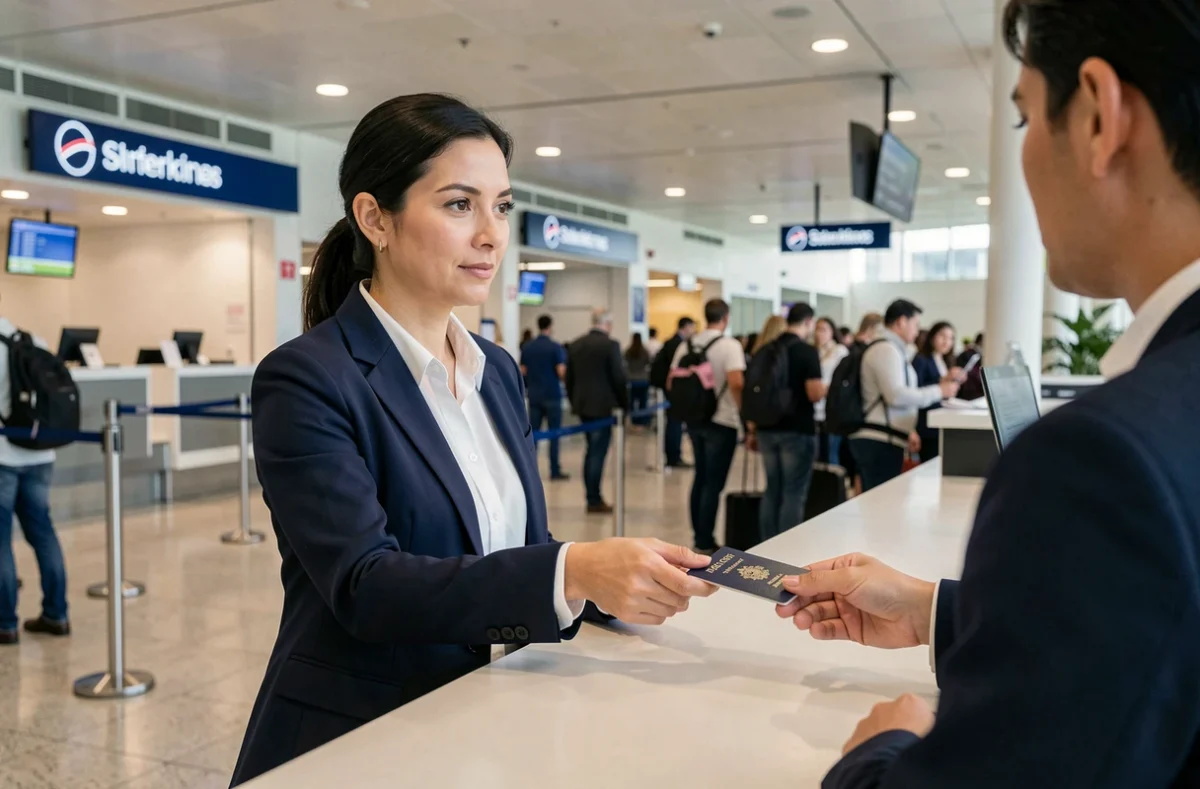
Buying a plane ticket is not enough to guarantee a seat on board. Between the reservation and the moment you step into the cabin, an intermediate step conditions everything else: check-in, which generates the boarding pass. Without this document, there is no passing through security checks, no access to the boarding gate, no flight.
This mechanism, often perceived as a mere formality, actually fulfills contractual, security, and operational functions that digitization has not simplified as much as one might think.
What check-in validates beyond flight confirmation
The confusion between a plane ticket and a boarding pass remains common. The ticket is a commercial document: it certifies a transport contract between you and the airline, with a reservation number, an itinerary, and a fare. The boarding pass, on the other hand, is an operational document. It confirms that you have been accepted on a specific flight, at a specific time, with an assigned seat.
Check-in is therefore not a duplicate of the reservation. It is the moment when the airline verifies your identity, checks the validity of your travel documents, and integrates you into the list of passengers actually expected on board. Without check-in, the ticket alone does not grant the right to board the plane.
Several airlines set strict deadlines. Southwest, for example, requires passengers to have their boarding pass and to be present at the gate area no later than ten minutes before departure. After this deadline, boarding may be denied, even with a valid ticket. This contractual logic is common to most carriers, with thresholds varying according to the type of flight (domestic, international, connecting).
You can find useful information on A Fabulous Trip to understand in detail when each document comes into play in the airport journey.
Online check-in and digital boarding pass: a simplification under conditions
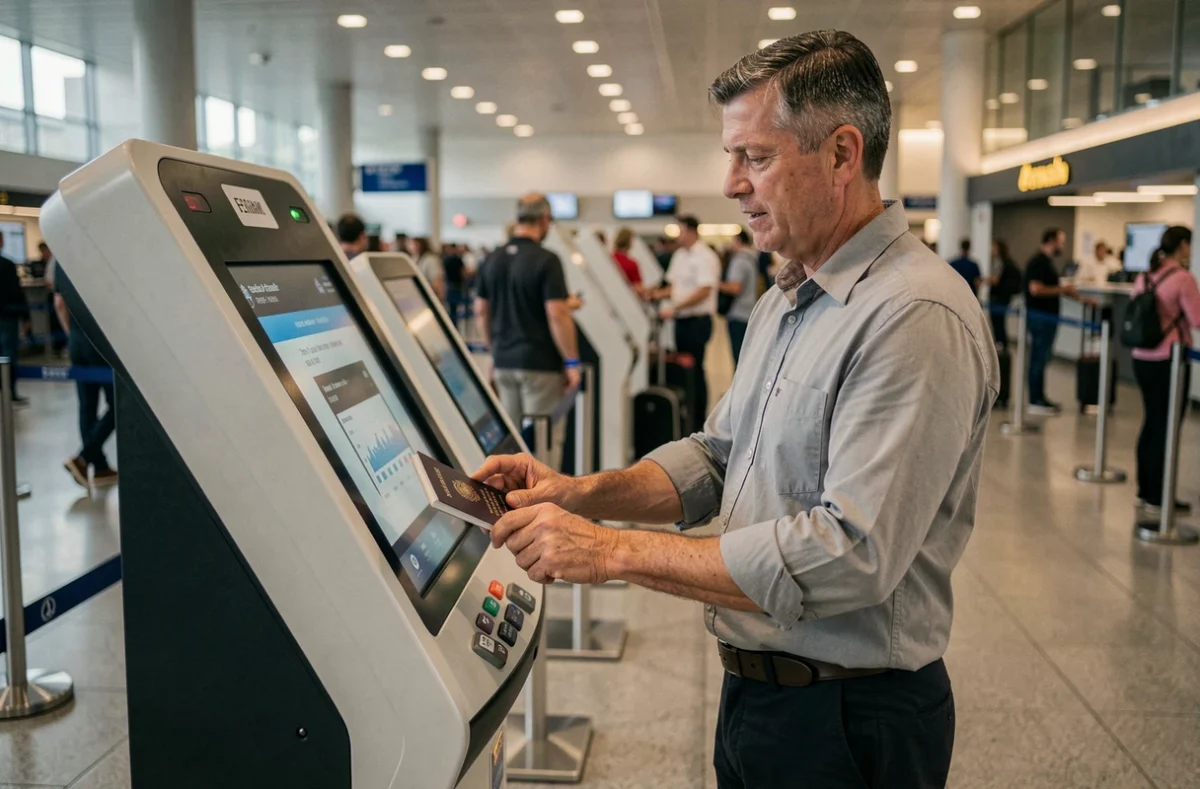
Online check-in, generally open between 24 and 48 hours before departure depending on the airlines, allows you to generate your boarding pass from a computer or smartphone. For travelers without checked baggage, this option seems to make a trip to the airport counter unnecessary.
In practice, even without baggage to check, check-in remains necessary to obtain the boarding pass. Both Finnair and Southwest remind passengers of this requirement. The pass is then used to pass through security checks and to access the boarding area. Believing that one can go directly to the gate with just a reservation number is a mistake that can cost a flight.
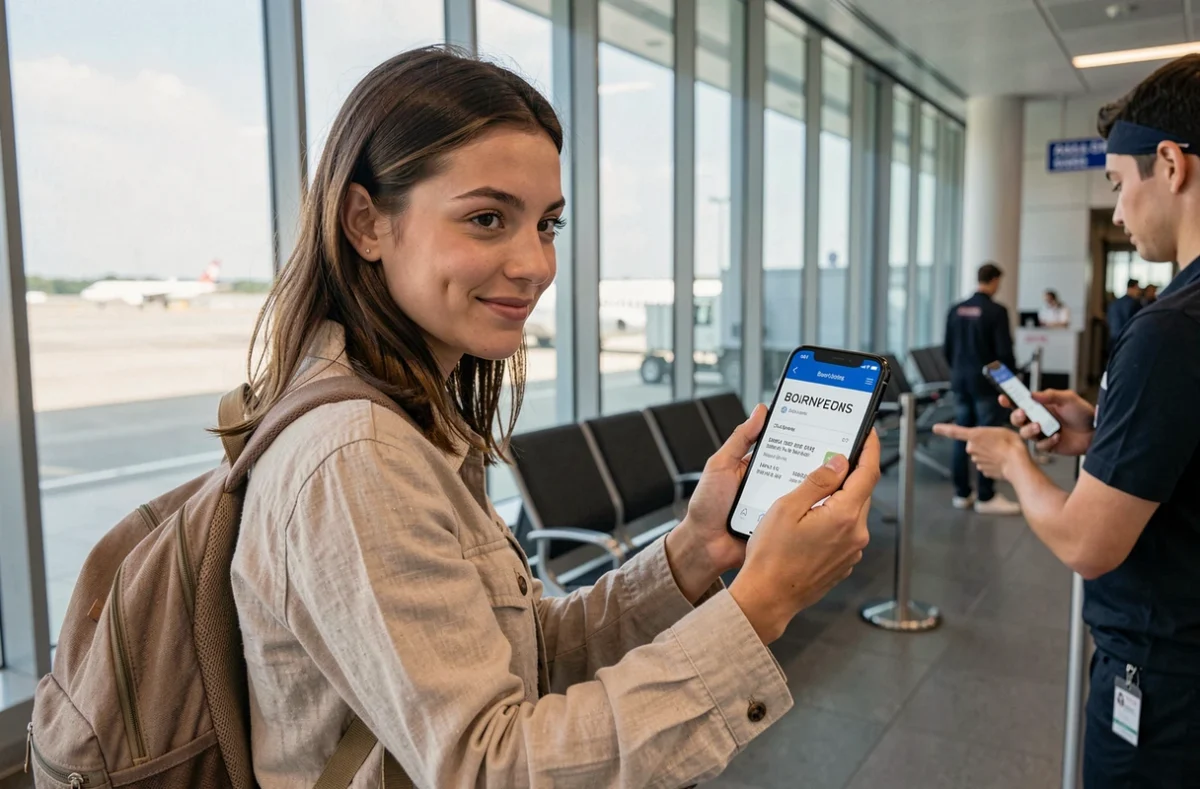
The digital version of the boarding pass (on a mobile app or in PDF format) is now accepted by the majority of airlines and airports. Some countries even allow its use at immigration control, instead of a printed document.
However, a few situations make online check-in impossible or insufficient:
- Flights requiring manual document verification (visa, medical certificate, parental authorization for an unaccompanied minor) often necessitate a visit to the counter.
- Some low-cost airlines charge significantly higher fees for airport check-in compared to the online procedure, making digital check-in not optional, but financially constrained. Ryanair applies this type of surcharge.
- Technical errors (synchronization issues between the booking agency and the airline, last-minute flight changes) can block online check-in and require the passenger to appear in person.
Boarding pass and personal data security
The boarding pass is not limited to a barcode scanned at the gate. It contains your full name, flight number, seat, and sometimes your reservation number (PNR), which can provide access to other sensitive information: contact details, full itinerary, or even payment details in certain systems.
Discarding your boarding pass after the flight poses a security risk. Le Figaro reminded in 2023 that this document could contain data exploitable by third parties. Photographing your boarding pass to post on social media exposes you to the same risks: the barcode or QR code can sometimes be enough to extract PNR data.
This dimension goes beyond the simple journey. The boarding pass is also a carrier of sensitive information, and the transition to exclusively digital versions does not fully resolve the issue. A shared screenshot or an unlocked phone in a public place presents the same vulnerabilities as a paper document left on a seat.
Denial of boarding and recourse: the role of the pass as proof
In the event of a dispute with an airline (overbooking, canceled flight, prolonged delay), the boarding pass serves as a central piece of evidence. It proves that you were indeed checked in for the flight, that you arrived on time, and that you met the conditions to board.
Without a boarding pass, claims for compensation become more difficult to substantiate. European regulations on air passenger rights provide for compensation in cases of involuntary denial of boarding, but the burden of proof partly rests on the traveler. Keeping your boarding pass (or its digital version with a timestamp) for several weeks after the flight is a precaution often overlooked.
Airlines pushing for fully dematerialized processes also effectively transfer the responsibility of archiving to the passenger. An email confirmation of check-in accidentally deleted or a reset app can complicate the reconstruction of the file.
Check-in and the boarding pass are not redundant formalities with the reservation. One activates the transport contract, the other materializes it. Neglecting them exposes you to a denial of boarding, a loss of recourse in case of dispute, or simply an avoidable extra cost at the counter. Their format evolves, their function remains the same.