The lifespan of an asphalt surface depends on a range of measurable factors: mix design, laying thickness, traffic intensity, weather conditions and maintenance frequency. Comparing these variables helps explain why two asphalt surfaces laid in the same year can age in radically different ways.
Hot-mix asphalt, cold-mix asphalt and porous asphalt: a lifespan comparison
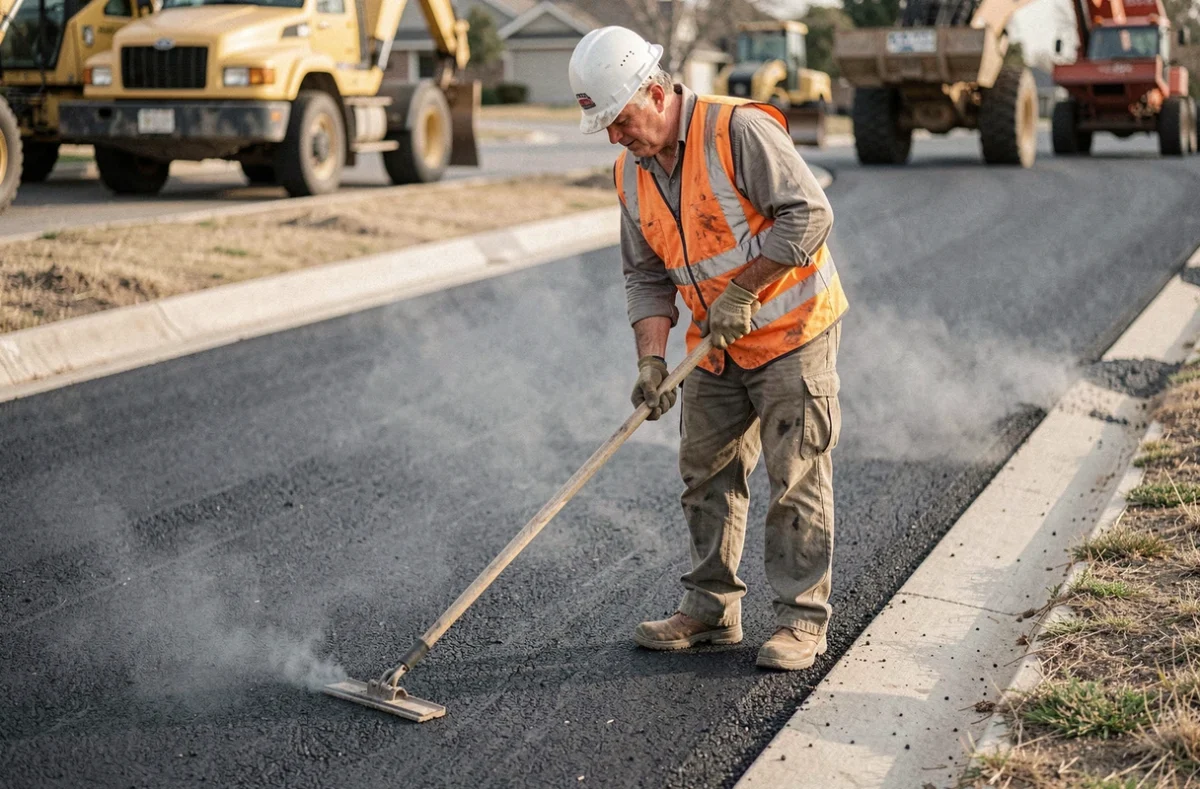
The type of asphalt directly affects its long-term durability. Hot-mix asphalt, laid at around 150 °C and then compacted with a roller, forms a dense layer that can withstand heavy loads over time. Cold-mix asphalt, used for spot repairs, offers significantly less durability.
| Type of asphalt | Typical use | Relative lifespan | Resistance to heavy traffic |
|---|---|---|---|
| Hot-mix asphalt (BBSG, BBM) | Roads, car parks, driveways | High | High |
| Porous asphalt | Urban roads, rainy areas | Medium (gradual clogging) | Medium |
| Cold-mix asphalt | Temporary repairs | Low | Low |
| Enhanced asphalt (polymers, fibres) | High-traffic routes, industrial areas | Longer than conventional asphalt | Very high |
Asphalt mixes enhanced with polymers or fibres, increasingly used on heavily trafficked routes, slow cracking and rutting compared with conventional mixes. Their higher upfront cost is offset by longer intervals between resurfacing cycles.
The lifespan of an asphalt surface therefore varies considerably depending on the mix selected and the laying conditions, making any general estimate unreliable without knowing these factors.
Bond between layers and laying quality: the invisible differences
One factor in deterioration that is rarely visible on the surface is the quality of the bond between the different pavement layers. The tack coat, applied between the base and the wearing course, plays a crucial role.
A dusty base or an incorrect tack coat application rate can cause premature delamination and material loss. Covering the tack coat before it has broken (that is, before the water it contains has evaporated) compromises the bond between layers.
This defect does not appear immediately. The first signs may emerge several months after laying, in the form of localised patches or potholes, with no apparent connection to traffic.
What layer delamination reveals
When the wearing course comes away in patches, the problem is not the asphalt itself but the preparation of the base. A contractor who neglects to sweep the formation layer or applies the tack coat in cold weather creates a structural weakness from day one.
The same applies to a private driveway: technically correct installation matters just as much as the choice of material. A well-formulated asphalt mix laid on a poorly prepared base will deteriorate faster than a standard mix installed correctly.
Cracks and water infiltration: the accelerated deterioration cycle
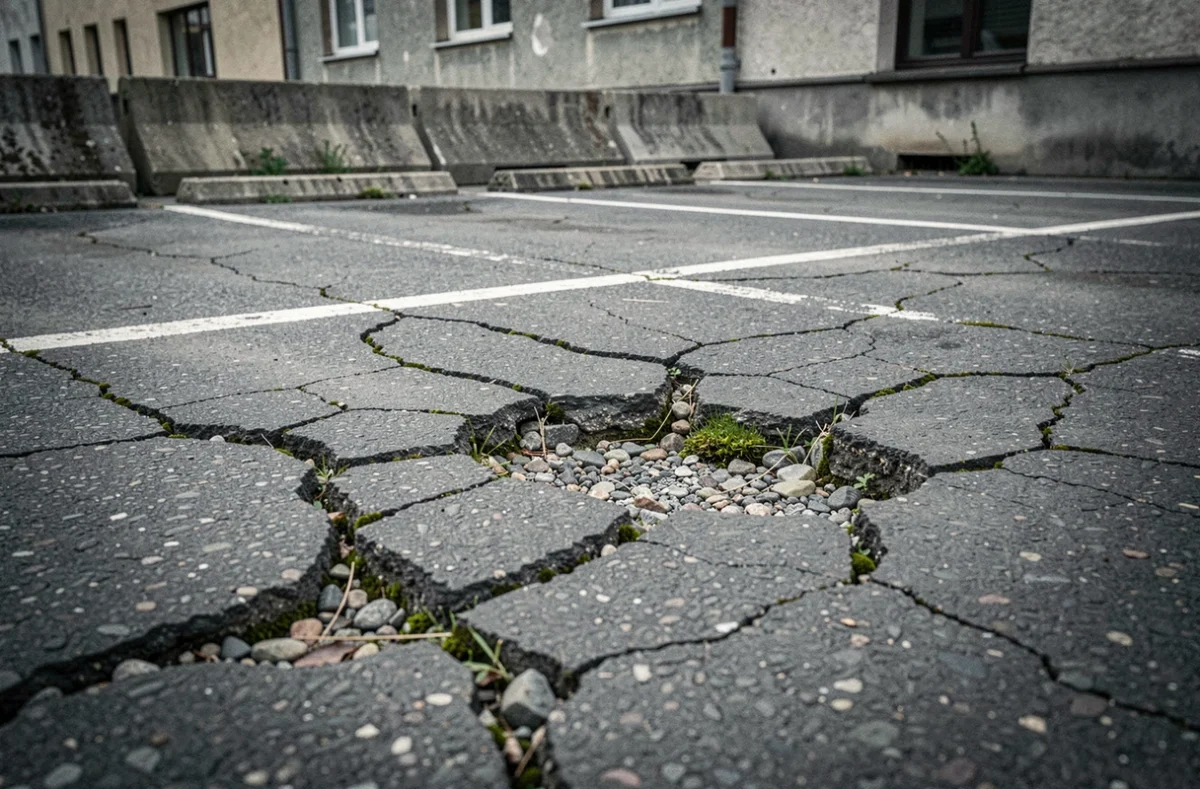
Surface cracks are the first stage in the ageing of an asphalt surface. They result from a combination of temperature fluctuations (freeze-thaw cycles and summer heat) and the mechanical stresses caused by traffic.
- Longitudinal cracks often appear at the edge of the road, where the structure is thinnest and runoff water tends to collect
- Alligator cracking indicates structural fatigue in the base layer, not just the surface
- Transverse cracks may indicate thermal shrinkage of the bitumen, particularly in regions with wide temperature variations
Water entering through cracks is the main accelerator of deterioration. It reaches the lower layers, weakens the granular base and causes settlement or potholes. In freezing weather, trapped water expands and widens existing cracks.
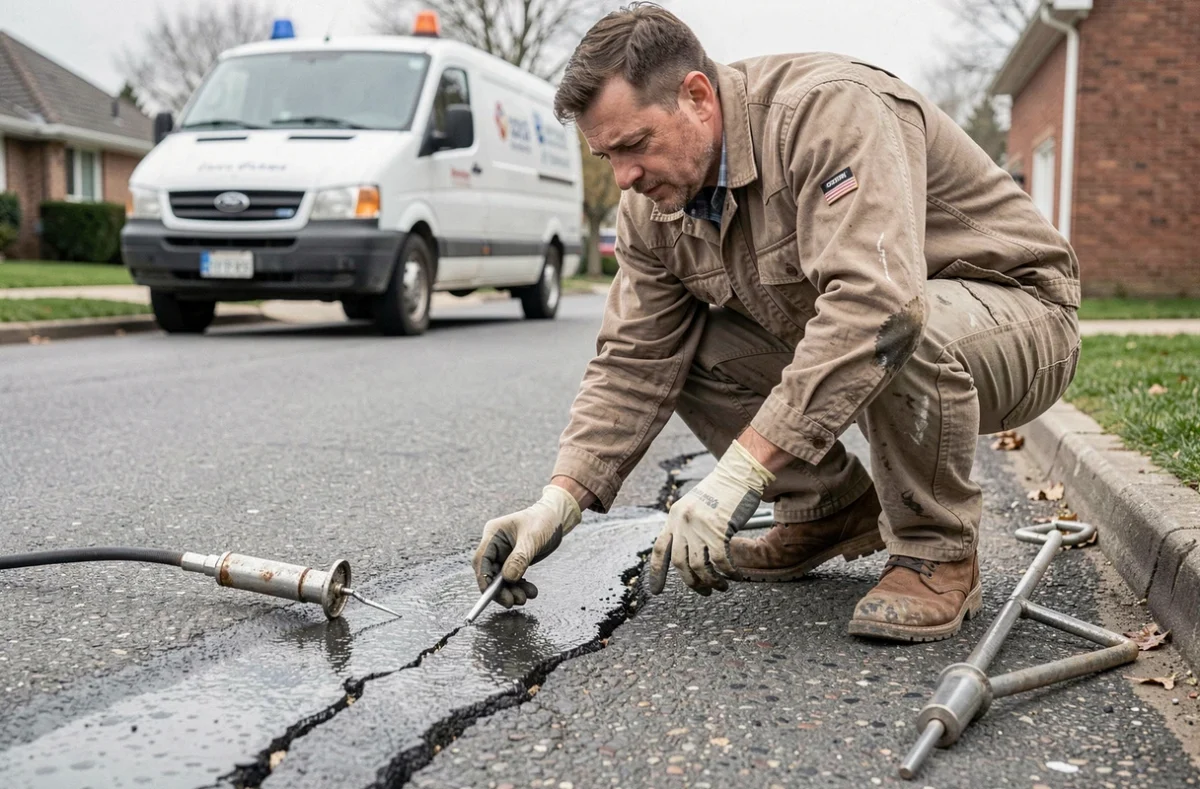
Sealing cracks while they are still superficial helps prevent water from reaching the structure. Filling them with a flexible bituminous product remains the most common and least expensive method.
Preventive asphalt maintenance: which measures make a real difference?
Not all maintenance measures are equally effective. Some are simply common sense (such as sweeping up fallen leaves), while others have a measurable impact on the surface’s lifespan.
Cleaning and weed control
Plants that take root in cracks exert mechanical pressure, causing them to widen. Regular weeding, before roots penetrate the wearing course, prevents this. Washing with a moderately pressurised water jet is enough to remove moss and organic deposits that trap moisture on the surface.
Avoiding concentrated loads
Motorcycle kickstands, trailer jockey wheels and jack stands can puncture the asphalt, especially during the first few weeks after laying and in hot weather. A period of fifteen to thirty days without traffic is recommended after a new surface is laid, depending on the weather conditions.
When to move from preventive to corrective maintenance
Surface cracks can be treated with crack sealing or a surface dressing. A deformed, rutted or delaminated asphalt surface requires milling and structural repairs. The distinction between surface treatment and structural repair depends on the actual condition of the pavement, not its age.
Renovation and in-place recycling: an alternative to full replacement
In-place recycling involves milling the old pavement, mixing the reclaimed material with a hydraulic or bituminous binder, and then relaying it. This technique avoids the need for large quantities of new materials and reduces transport costs.
The reuse of reclaimed asphalt is governed by standard NF EN 13108-8, which requires the recovered aggregates to be characterised. The presence of coal tar or asbestos may limit or even prohibit the reuse of these materials, making preliminary testing essential for any renovation project.
For a residential driveway, in-place recycling is rarely a proportionate solution. Localised repairs to damaged areas, followed by a surface dressing across the whole driveway, often offer the best balance between cost and results.
The lifespan of an asphalt surface depends less on the raw material than on three specific factors: the quality of the bond between layers during installation, how quickly the first cracks are treated, and how well water infiltration into the structure is controlled. A properly laid surface that is inspected regularly retains its mechanical properties far longer than a new asphalt surface left without maintenance.