
Choosing lawn seed starts with the composition of the grass mix, not the picture on the packet. Each species—tall fescue, perennial ryegrass, Kentucky bluegrass—has specific agronomic requirements. Understanding how they behave in your garden soil will have a much greater impact on the success of your seeding than the timing or the amount of seed used.
C3 grasses and soil temperature: the factor labels don’t mention
Grass seed mixes sold at garden centres consist almost exclusively of C3 grasses, which are suited to temperate climates. Germination begins when the soil temperature stays above a minimum threshold for several consecutive days. Sowing too early in spring, when the air is mild but the soil is still cold, delays emergence and leaves seeds exposed to birds and washout.
Measuring soil temperature with a simple kitchen thermometer pushed a few centimetres into the ground gives you more reliable information than the calendar. Autumn sowing, when the soil retains the warmth built up over summer, often produces faster, more even germination than sowing in March.
So, to choose the right lawn seed, you need to match the mix to the actual conditions on your plot at sowing time, rather than relying on a fixed date printed on the packet.
Fescues, ryegrass and bluegrass: which mix suits which lawn
Not all lawn grasses perform equally well in shade, under foot traffic or in drought. The ideal mix offsets the weaknesses of one species with the strengths of another. The proportions of each component make all the difference.
Fescues: the foundation for resilience
Tall fescues develop deep roots. They tolerate drought and poor soils well. Creeping red fescues, which have finer blades, form a dense carpet even in partial shade.
A fescue-dominant mix is suitable for south-facing gardens with limited watering, or areas beneath trees with light canopy cover.
Perennial ryegrass: quick to establish, needs regular maintenance
Perennial ryegrass germinates quickly and covers the ground within a few weeks. Its tolerance of foot traffic makes it a key component of sports turf and heavily used family lawns. In return, it needs frequent mowing and does not cope well with prolonged dry spells.
Kentucky bluegrass: density and self-repair
Kentucky bluegrass spreads through underground rhizomes, allowing it to naturally fill in damaged areas. It is slow to establish (several weeks longer than ryegrass), but once established, it forms a dense, cold-hardy lawn.
Combining ryegrass and Kentucky bluegrass gives you a lawn that establishes quickly and then thickens over time. It is a good choice for family play areas in continental climates.
Lawn seed for clay, sandy or chalky soil
Before buying a mix, we recommend checking the structure of your existing soil. Clay soil retains water and can deprive roots of oxygen in winter. Sandy soil drains quickly but retains neither water nor nutrients. Chalky soil, which is often shallow, calls for species that tolerate a high pH.
- Heavy clay soil: favour tall fescues and Kentucky bluegrass, which tolerate temporary waterlogging. A sandy top dressing improves germination.
- Sandy or free-draining soil: creeping red fescues establish well thanks to their deep roots. Ryegrass can quickly struggle in summer without watering.
- Shallow chalky soil: sheep’s fescue tolerates poor, dry ground. Kentucky bluegrass struggles if the layer of topsoil is too thin.
- Balanced loamy soil: most standard mixes are suitable. This is the most forgiving soil type, where a ryegrass/fescue/bluegrass mix performs well.

Microclover and ground covers: a partial alternative to conventional seed
Microclover is being tested on sports fields and in public spaces to reduce reliance on watering. Microclover fixes atmospheric nitrogen and reduces the need for fertiliser, making it an interesting addition to a conventional lawn mix.
However, it is not a one-size-fits-all solution. Microclover attracts pollinators, which is worth considering near a play area. It does not tolerate heavy foot traffic as well as ryegrass varieties selected for sports use. Its balance also depends on fertilisation: too much nitrogen favours the grasses at its expense, while too little allows the clover to dominate and makes the lawn less uniform.
The most effective approach is to divide your garden into zones based on how they are actually used: a hard-wearing lawn for frequently used areas, a grass-and-microclover mix for ornamental or low-traffic areas, and pure ground cover (creeping thyme, sedum) for slopes or strips that are difficult to mow.
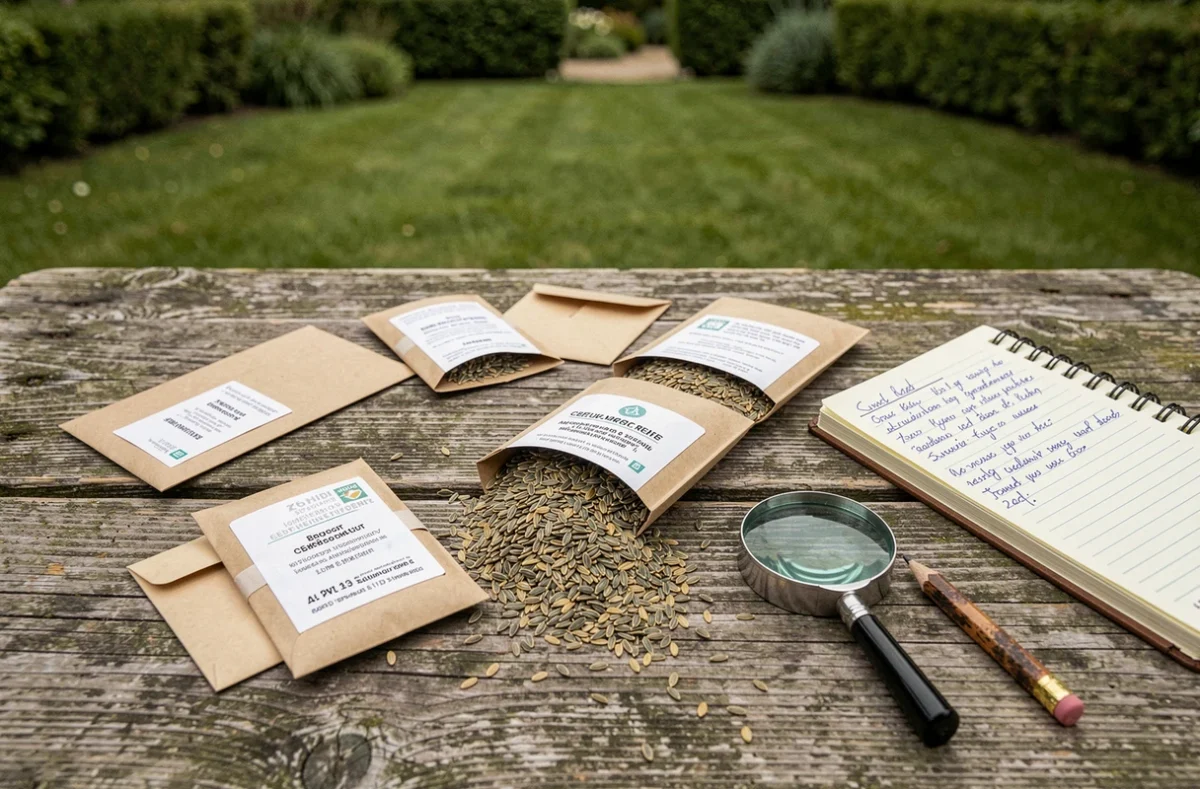
How to read a lawn seed mix label
A seed packet label lists the percentage composition of each species and variety. Two details deserve particular attention:
- Species purity: this indicates the actual proportion of seed from the stated species, excluding impurities and weed seeds. A high purity rate reduces the risk of weeds appearing after sowing.
- Germination rate: this measures the seeds’ ability to sprout under standardised conditions. A mix loses germination capacity the longer it is stored. Checking the batch date helps you assess how fresh the product is.
- Whether the varieties are listed in the official catalogue: listed varieties have been tested against several criteria, including disease resistance, density and summer performance. Their presence on the label is a sign of rigorous variety selection.
A cheap mix containing unlisted varieties often produces an uneven lawn that needs more overseeding from the second year onwards. The initial savings are offset by the cost of maintenance and reseeding.
Ultimately, choosing lawn seed comes down to three practical factors: the type of soil, how each area of the garden will be used, and the varietal quality of the mix. A packet suited to all three will give you a long-lasting lawn with a level of maintenance that matches what you are prepared to put in.