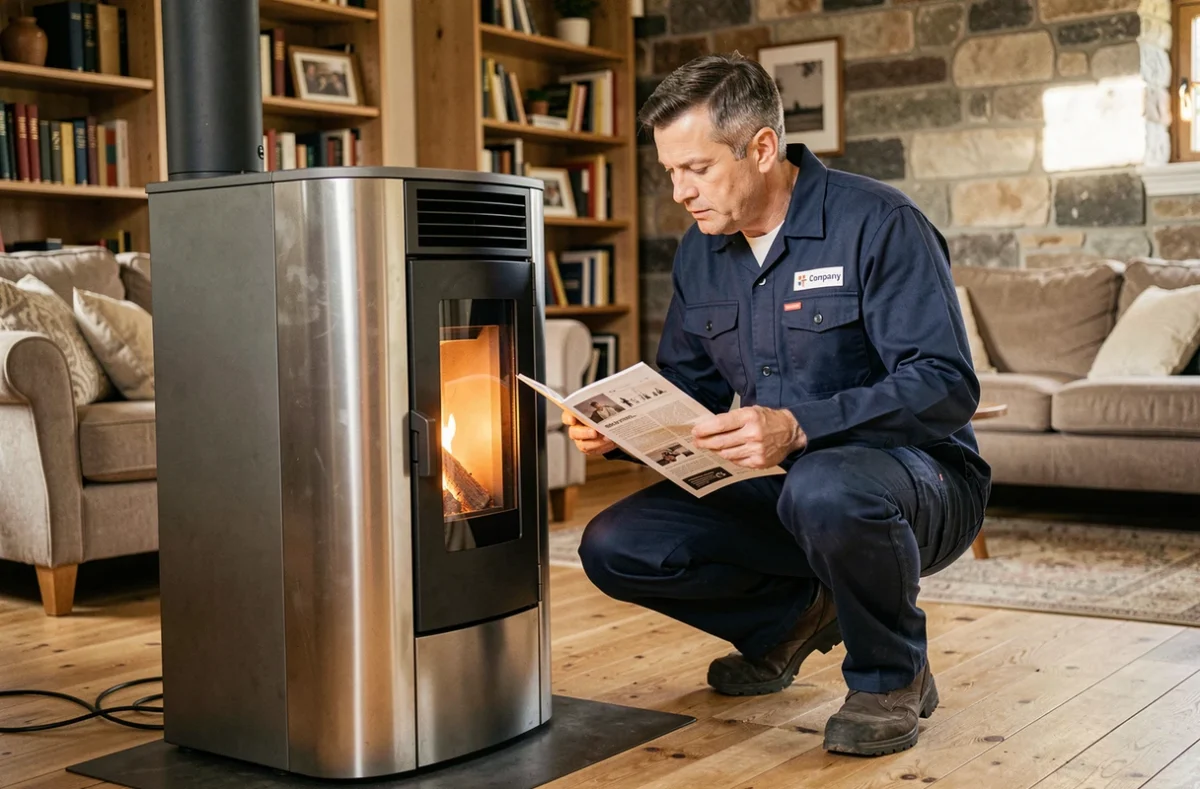
A pellet stove or boiler is not sized in the same way as an electric convector heater. You should contact a pellet heating specialist early in the project, even before choosing a model, because the existing flue, the volume to be heated and the type of ventilation all affect the appliance just as much as the budget.
Pellet appliance maintenance and chimney sweeping: two separate requirements
Since October 1, 2023, pellet stoves and inserts have been subject to periodic maintenance by a qualified professional, separate from chimney sweeping. Confusing the two services is still the most common mistake people make when getting in touch.
Chimney sweeping covers the smoke exhaust flue. Maintenance covers the appliance itself: cleaning the burner, checking for leaks, inspecting the pressure switch and checking the auger. When requesting a quote, specify whether you need one service, the other or both, as some tradespeople only offer chimney sweeping.
The minimum chimney-sweeping frequency is set by national decree, but local health regulations may require additional visits. A specialist based in your department will know the specific rules in your municipality and provide a certificate to keep on file—a document insurers require in the event of a claim. Without a chimney-sweeping certificate, your claim may be denied.

We recommend hiring a professional who can provide both services during the same visit, reducing travel costs and ensuring a comprehensive assessment of the installation. To get started, you can contact the Chauffage Pellets website to find qualified professionals in your area.
Qualifications and certifications to check before contacting a pellet stove installer
Requesting a quote without checking a professional’s credentials is like signing a blank check. Chimney sweeping is regulated under the French Crafts Code, and installing a pellet boiler requires specific qualifications.
Before discussing the project, ask for the following:
- RGE (Recognized Environmental Guarantor) certification, which is required for the end customer to qualify for certain financial incentives for energy-efficient renovations
- An active SIRET number and ten-year liability insurance covering the appliance installation and connection to the flue
- Proof of training from the manufacturer of the stove or boiler brand you are considering, which is required for the manufacturer’s warranty to remain valid
- A copy of the chimney-sweeping certificate used, compliant with the requirements of the current decree
An installer who refuses to provide these documents before the first technical visit does not offer the level of transparency expected for this type of project.
The pitfalls of contractor-matching platforms
Websites that generate automatic quotes rarely highlight a tradesperson’s actual qualifications. The professional at the top of the list is often the one who pays the most for visibility, not the one whose certification matches your installation. Opt for direct contact: call or use the form on the appliance manufacturer’s website.
When to contact a pellet heating specialist for a quote
Book an appointment between May and July, well before the heating season. In winter, wait times can stretch to several weeks, according to chimney sweeps interviewed by France 3 Régions. Planning ahead gives you time to discuss how the installation works, compare several quotes and schedule any necessary flue work.
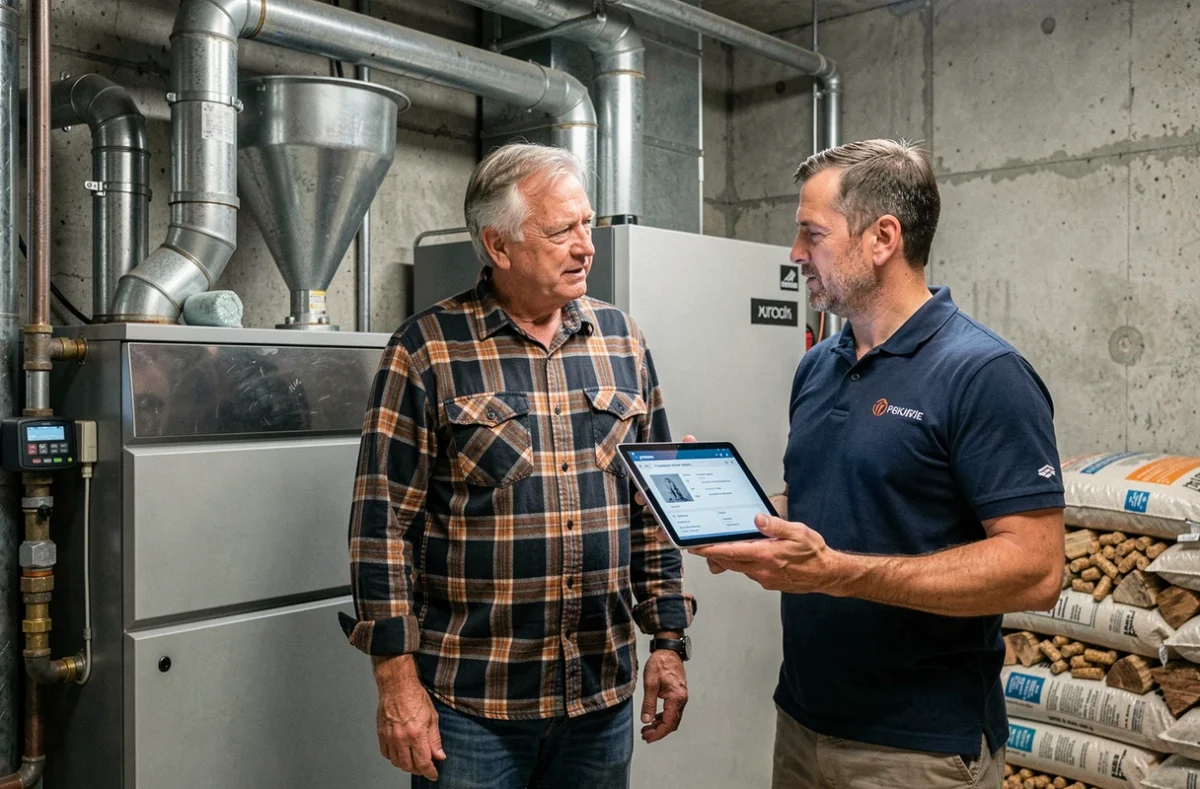
This off-season window has another advantage: the professional has time to carry out a thorough technical inspection, including measuring the flue, assessing the room’s insulation and checking the draft. These measurements are needed to size the appliance correctly.
Financial incentives: what to clarify during your first conversation
Financial incentives for energy-efficient renovations change regularly. Some CEE (Energy Savings Certificates) bonuses and local grants are still available, while other schemes have been reduced or discontinued. During your first conversation, explicitly ask the specialist to distinguish the incentives you can still claim from those that no longer apply to your situation.
A reputable professional will include this assessment in the quote or in a separate document. If the tradesperson is vague about amounts or eligibility requirements, consider it a warning sign: the criteria change every six months, and only an installer who actively keeps up with regulatory updates can provide reliable advice.
How to choose a wood and pellet heating professional
The quote price alone is not enough to choose between two tradespeople. Your decision should be based on a range of technical criteria that will affect the system’s long-term performance.
- Proximity: a local installer can provide faster after-sales service and repairs if something goes wrong, and will know the regulatory requirements in your municipality
- Experience with similar installations in your type of home (detached house, apartment with a shared flue, major renovation)
- The ability to provide annual maintenance after installation, so you do not have to deal with multiple contractors
- Clear information about appliance delivery times and the installation schedule
A good rule of thumb is to ask for the contact details of two or three recent customers. A professional who is confident in the quality of their work will have no problem providing them.
Choosing a pellet heating specialist affects your home’s safety, regulatory compliance and thermal comfort for years to come. Checking qualifications, getting in touch during the off-season and clarifying the exact scope of work from the outset are three practical steps that can make the difference between a well-managed project and a source of complications.