
A parent struggling to climb stairs, a bill for home help piling up, an incomprehensible administrative letter: the situations that drive the search for assistance for the elderly are rarely abstract. The problem is that the support systems available in 2024 are numerous, scattered among several organizations, and rarely explained simply. Here is a concrete overview to clarify things.
MaPrimeAdapt’: the unique aid to adapt housing for aging
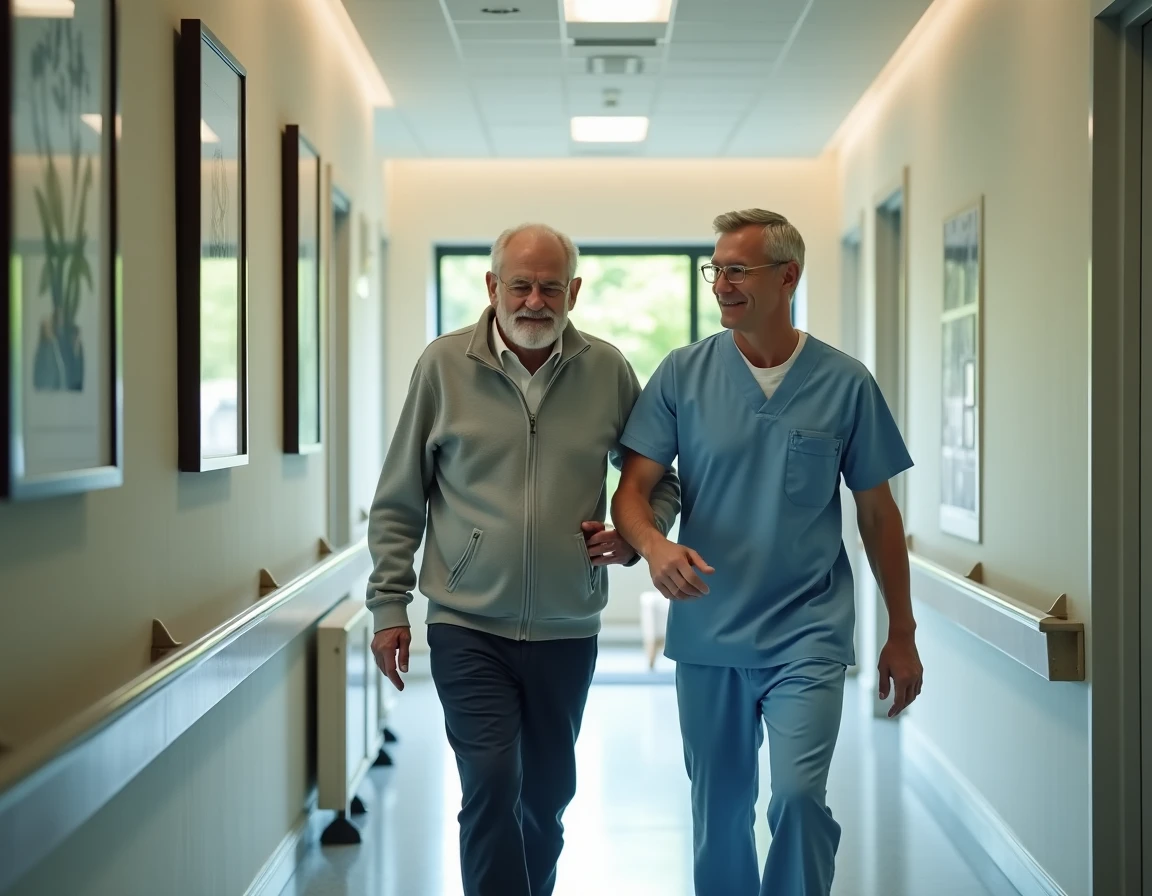
Before 2024, several aids coexisted to finance home adaptation work (walk-in shower, grab bars, stairlift). Their overlap made the procedures confusing. Since 2024, MaPrimeAdapt’ replaces and merges these old systems into a single aid, managed by Anah (National Housing Agency).
It is aimed at people over 70 years old, or from 60 years old in the case of early loss of autonomy. The funding can cover up to 50% or 70% of the cost of the work depending on the household’s resources, within a limit set by Anah.
A point that many articles overlook: MaPrimeAdapt’ cannot be combined with the Autonomy tax credit for the same work. This tax credit allows for a deduction of 25% of specific equipment expenses (shower seat, grab bar). Therefore, one must choose between the two depending on the type of project and the level of resources. A useful summary for comparing these systems can be found among the services for the elderly on Senior Surfers, which details the conditions of each aid.
Home APA and ASPA: two allowances not to be confused

You may have noticed that the acronyms APA and ASPA appear everywhere, often without clear explanation? Yet they are two very different aids that do not meet the same need.
Personalized autonomy allowance
The APA (personalized autonomy allowance) finances services related to loss of autonomy: home help, meal delivery, assistance with outings. It is paid by the departmental council after assessing the degree of autonomy of the person (GIR scale). The APA is not subject to resource conditions for access, but the amount of the remaining charge varies according to income.
It concerns people classified in GIR 1 to 4, meaning those who have a significant loss of autonomy. People still autonomous (GIR 5 and 6) are not eligible for the APA but can seek other aids, particularly from their pension fund.
Solidarity allowance for the elderly
The ASPA (solidarity allowance for the elderly) is a social minimum. It guarantees a minimum income for retirees whose resources are low. It has nothing to do with physical autonomy: a perfectly healthy person but with a low pension can benefit from it. The ASPA is recoverable from the estate beyond a certain amount of net assets, which sometimes hinders applications.
Approved family hosting: an unknown alternative between home and nursing home
Staying at home or entering a nursing home: the choice seems binary for many families. However, approved family hosting constitutes a structured third option, with a precise legal framework.
The principle: an elderly person is hosted by a family caregiver approved by the department. A hosting contract outlines the conditions (rates, hours, mutual obligations). The department controls the rates charged.
On the financing side, several aids can be mobilized:
- The APA, if the hosted person is experiencing loss of autonomy (GIR 1 to 4), to finance daily support
- Social housing assistance (ASH), paid by the department subject to resource conditions, to cover part of the hosting costs
- Housing assistance (APL or ALS), since family hosting is considered a type of accommodation eligible for these allowances
The payment and social contributions of the caregiver are secured by a specific mechanism: the Cesu family hosting. This mechanism simplifies administrative procedures for both parties.
Pension fund aids: the safety net for GIR 5 and 6
Relatively autonomous elderly people (classified GIR 5 or 6) do not have access to the APA. However, they are not without solutions.
Pension funds offer their own home support systems. The Retirement Insurance has set up an aid plan called OSCAR, which finances services to prevent loss of autonomy: occasional home help, support after hospitalization, fall prevention actions.
The Agricultural Social Mutuality (MSA) offers a comparable system for its members, including support during post-hospitalization outings. These aids are granted subject to resource conditions and after assessing needs by the relevant fund.
- The OSCAR plan from Retirement Insurance covers home help, meal delivery, and prevention workshops
- The MSA offers specific support for returning home after hospitalization
- These aids cannot be combined with the APA: one must choose the system best suited to their situation
Home help services and teleassistance: everyday support
Beyond allowances, support for the elderly relies on concrete services. Home autonomy services (SAD, formerly SAAD) intervene for daily living activities: bathing, meal preparation, shopping, home maintenance.
Teleassistance complements this system. A device or bracelet allows the elderly person to alert a platform in case of a fall or malaise. The subscription cost can be partially covered by the APA or by certain pension funds.
The tax credit for personal services also applies to home help hours and teleassistance. It represents half of the expenses incurred, within an annual limit. This tax lever is often underutilized by families who do not know that it applies even to non-taxable individuals, in the form of a credit (and not just a simple reduction).
The multiplicity of organizations (department, pension fund, Anah, CAF) makes the administrative process complex. The most reliable starting point remains the portal for-les-personnes-agees.gouv.fr, which allows users to simulate their rights and identify the competent contacts based on their geographical situation and degree of autonomy.