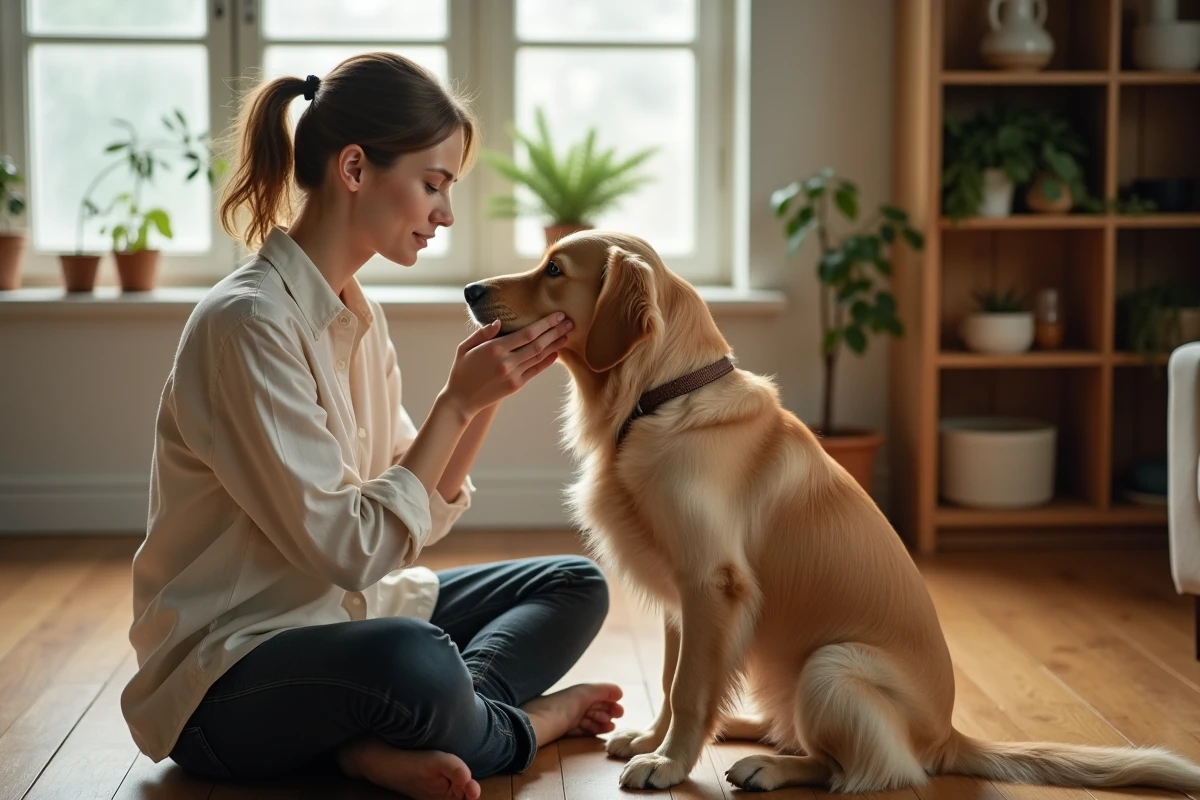
Animal communication refers to a set of practices aimed at perceiving the emotional states, needs, or discomforts of an animal without resorting to human verbal language. When applied to dogs, it relies on observing body language, reading calming signals, and, in its intuitive version, on a form of mental connection that the practitioner establishes with the animal.
Multimodal approaches and biofeedback: what replaces pure telepathy
Interest in pure telepathic communication is declining in favor of methods that integrate measurable tools. Multimodal approaches combine classic behavioral observation with technologies like biofeedback, which measures the dog’s physiological variations (heart rate, muscle tension) during a session.
This shift particularly concerns working dogs. Guide dogs, detection dogs, or assistance dogs benefit from protocols where intuitive reading alone is insufficient. The practitioner cross-references their impressions with physiological data to refine their interpretation.
To explore the various ways to support dogs at Syntonie Animale, the process often involves a remote session where the communicator works from a photo and a detailed questionnaire filled out by the guardian.
This evolution towards hybrid approaches does not mean that the intuitive dimension disappears. It is repositioned as a complement, not as an autonomous diagnosis. The nuance matters, especially when the dog presents serious behavioral issues.
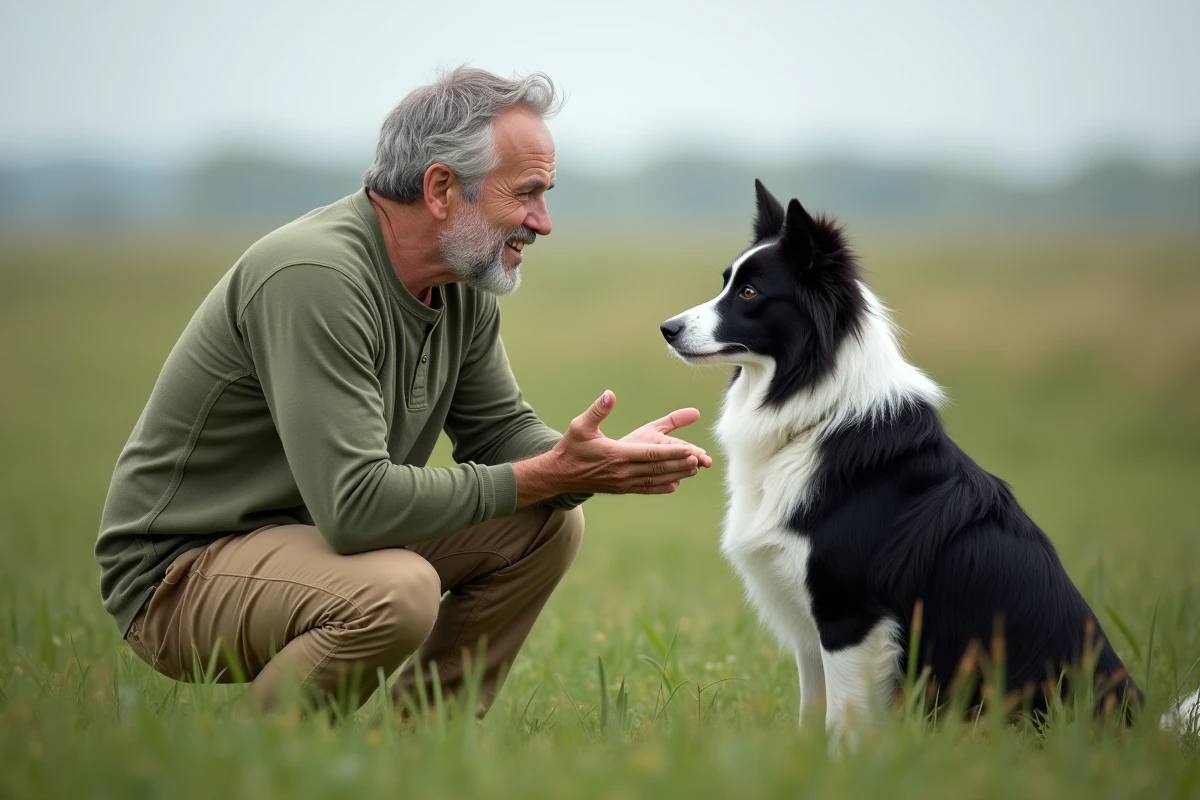
Reactive dogs and intuitive animal communication: risks of follow-up without ethology
A reactive dog (one that barks, charges, or freezes in response to certain stimuli) suffers from a behavioral problem that requires a structured protocol. Replacing an ethological follow-up with an intuitive session can worsen the situation.
The mechanism is simple. The communicator picks up an emotion (fear, frustration, old pain) and relays it to the guardian. The guardian then alters their behavior towards the dog, sometimes avoiding triggering situations instead of gradually desensitizing the dog. The dog no longer confronts the stimulus, its tolerance threshold decreases, and reactivity intensifies.
Scientific limits of intuitive communication
No reproducible experimental protocol has validated the telepathic transmission of information between a human and a dog. Intuitive sessions rely on the subjective interpretation of the practitioner, without an independent verification method.
This does not mean that every session is useless. The attentive listening of the guardian, the prior questionnaire, and the time spent observing the dog often lead to real insights. The problem arises when this practice is presented as a substitute for the work of a veterinary behaviorist or an educator trained in ethology.
- A reactive dog needs a desensitization plan with measurable progression criteria, not just an emotional reading.
- Canine anxiety disorders (separation anxiety, noise phobia) respond to documented behavioral protocols, sometimes combined with medication prescribed by a veterinarian.
- Intuitive communication can delay appropriate care if the guardian believes that the “message” received is sufficient to resolve the problem.
Regulatory framework for animal communicators in Europe
Since January 2026, a European directive (2025/478 on paramedical animal practices) requires professional animal communicators to declare their practices to local veterinary associations. The goal is to regulate therapeutic claims and prevent sectarian abuses.
This obligation changes the game for practitioners who offered sessions without a legal framework. The declaration does not equate to a certification of competence, but it creates traceability. A guardian can verify that their communicator is declared, filtering out some practitioners without training.
What this directive does not cover
The directive does not define a mandatory training program or minimal educational content. A declared communicator is not necessarily competent in canine behavior. The proliferation of certifying training programs in recent years, often hybrid (online and in-person), reflects a real enthusiasm but without content harmonization.
A dog guardian must therefore verify two distinct things: the regulatory declaration of the practitioner and their actual training in ethology or animal behavior.

Animal communication session for a dog: process and quality criteria
A serious session follows a precise framework. The communicator first gathers the dog’s history (age, environment, diet, medical history, significant events). This questionnaire phase is crucial: the more precise the information, the more relevant the interpretation will be.
The session itself can take place remotely or in the presence of the animal. The practitioner then relays their impressions to the guardian, in the form of a written or oral report.
- A good communicator asks questions before giving answers. The session is not an intuitive monologue but a structured exchange.
- The report does not contain a medical diagnosis. Any suspicion of pain or pathology must be directed to a veterinarian.
- The practitioner specifies the limits of their intervention and recommends a behavior professional if the dog presents proven issues.
Feedback from veterinary clinical experiences shows a growing adoption of these sessions as a complement, especially for older dogs with fears that are difficult to explain through classic examination. The key remains the word “complement”: animal communication works better as support for professional follow-up than as a replacement.
The choice of an animal communicator for one’s dog ultimately rests on a simple criterion: their ability to recognize what exceeds their competence. A practitioner who refers to a veterinarian or a behavior educator when the situation requires it protects the animal far more than a practitioner who promises to resolve everything through intuition.