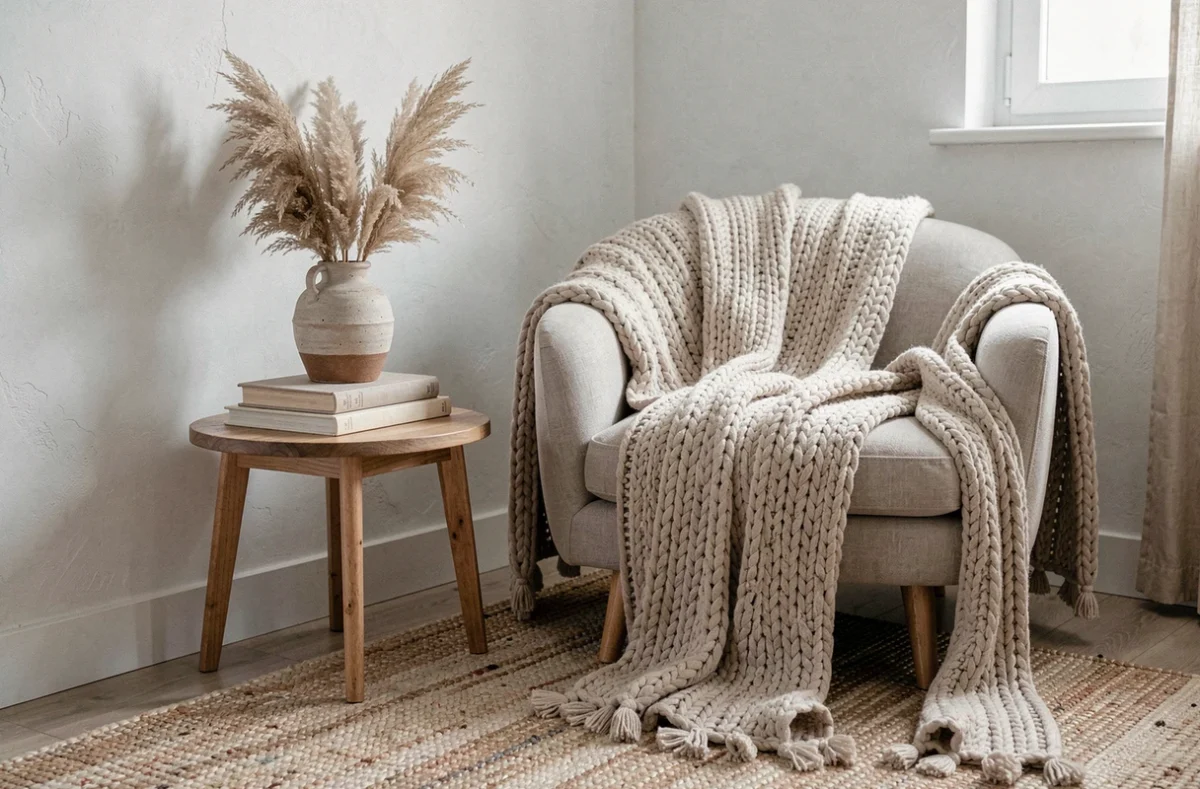
Refreshing an interior without compromising air quality or generating additional waste means setting criteria before choosing items. The choice of materials, the origin of the furniture and the type of lighting installed all affect the visual result as much as everyday comfort.
Since 6 August 2026, European regulations have limited formaldehyde emissions from furniture, but do not require a comparative label for shoppers. This framework means you have to check for yourself what each piece of furniture brings into your home.
Pollutant emissions and interior design: what labelling covers (and what it misses)
In France, construction and decorative products intended for indoor use carry an indoor air emissions label, graded from A+ to C. Paints, varnishes, adhesives and floor coverings: this rating indicates the volatile organic compounds emitted after application. It helps guide your choice of wall paint or decorative plaster.
Furniture, however, is not covered by this rating system. There is no equivalent label for a chest of drawers, a shelving unit or a sofa. European regulations that came into force in August 2026 cap formaldehyde emissions but do not provide consumers with a way to compare products. A low-cost particleboard item may meet the regulatory limit while still emitting other unregulated compounds.
For a decorating project, this imbalance has a practical consequence: choosing A+ paint and then installing a cheap new piece of furniture can cancel out the benefits. One solution is to reuse furniture (an older piece has already finished off-gassing) or choose manufacturers that voluntarily publish their emissions test results.

Reuse and sustainable decorating: second-hand furniture and reuse centres
Reuse has long been seen as a budget compromise. It is also an aesthetic choice. Finding an antique or handcrafted piece, repairing it and moving it from one room to another: these actions refresh an interior without replacing everything. Several catalogues available on the Ego Déco website also show how objects in different styles can coexist in the same contemporary space.
Social and solidarity economy organisations play an underrated role in this process. Reuse centres, local associations and repair workshops offer furniture that has been sorted and cleaned, and sometimes restored. Using these channels rather than relying solely on online platforms lets you check the item’s actual condition and support a local supply chain.
Bringing vintage pieces into a contemporary interior
Mixing eras works as long as you maintain consistency in materials or colours. A solid oak sideboard from the 1960s pairs well with a wall painted in a muted shade and a contemporary light fixture. A common mistake is to accumulate finds without a guiding principle, creating an unintended flea-market look.
- Limit vintage finds to two or three pieces per room to keep the space visually clear.
- Coordinate finishes: the same type of wood or metal (brass, brushed steel) creates a visual link between objects from different origins.
- Check that the surface finish on older furniture is not deteriorating (peeling varnish, or lead paint on furniture made before 1948).
Decorative lighting suited to how you use a room: colour temperature and your body clock
Decorative lighting is about more than setting a mood. For bedroom lighting at home, Anses recommends warm white light with a colour temperature below 3,000 K. In May 2019, the agency highlighted that blue-rich light in the evening disrupts biological rhythms. This scientific advice directly contradicts the trend for cool LED bulbs (4,000 K and above) sold as “designer lighting”.
An effective lighting plan uses three layers in each room:
- General lighting (a ceiling light or pendant) provides an even base. In a living room, a colour temperature of 2,700 to 3,000 K suits most uses.
- Task lighting (a desk lamp, reading light or worktop spotlight) is adjusted to the activity. Cooler light can work at a desk during the day, but not in the evening.
- Accent lighting (a string of lights, an LED strip behind a piece of furniture or a wall light aimed at a painting) adds depth. This is what truly transforms how a space feels.
Layering these three types of lighting changes a room’s atmosphere more than a new sofa. Replacing a single ceiling light with a setup using two or three light sources and a dimmer can radically change a living room without touching the walls or furniture.
Wall colours and textiles: transform a space without major renovation
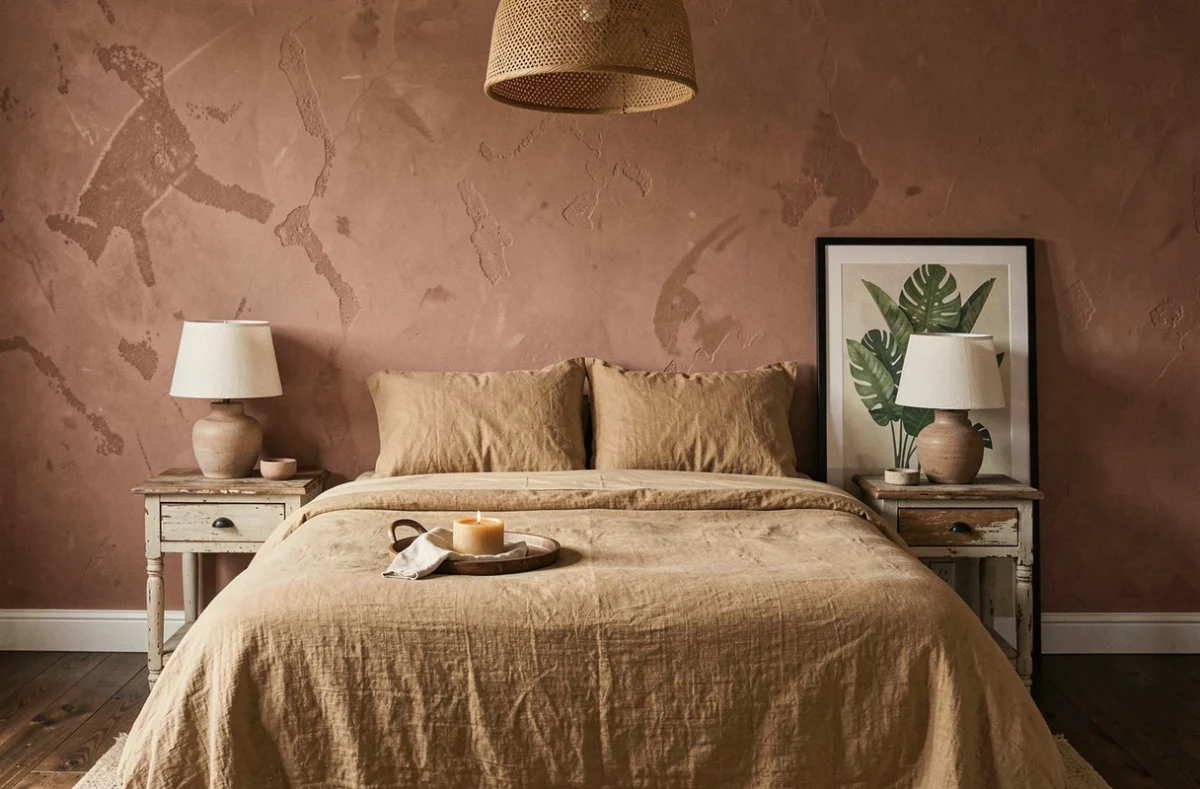
Painting a single wall in a saturated colour is still the quickest way to change how a space feels. A dark accent wall (peacock blue, sage green or terracotta) makes a long room appear shorter and creates a focal point. The effect comes from the contrast with the adjoining walls, not the colour alone: deep green on all four walls can feel oppressive, while a single feature wall adds structure.
Textiles play a complementary role. Linen or washed cotton curtains, cushions and throws absorb sound, soften lines and add texture without introducing pollutants, provided the fibres are natural and untreated. Changing cushion covers each season costs little and refreshes the colour palette of a living room or bedroom.
Furniture layout: a free, underused way to refresh a room
Moving a sofa a few inches, placing a table perpendicular to the wall instead of pushing it against one, or clearing a path to the window: these adjustments change how you move through a room and how natural light flows. Rearranging the furniture before buying anything helps avoid unnecessary purchases and can reveal that a piece stored in another room would fit better here.
Some retailers now offer to take away old furniture when delivering new items. This practical option makes it easier to refresh your interior and reduces clutter, provided you check the collection terms before placing your order.
A thoughtfully transformed interior combines these four elements (air quality, reuse, lighting, colour and layout) without requiring a large budget or structural work. The most useful first step is to take stock of what you already have at home before looking elsewhere.