Personal style refers to a set of recurring clothing choices that reflect each person’s preferences for fit, fabric and color. Creating a style that feels like you doesn’t mean replacing your wardrobe every season: most of the pieces you need are already in your closet, at a thrift store or at a tailor’s.
Textile reuse and fashion trends: a personal wardrobe without constant shopping
Spending on ultra-fast fashion is said to have declined in France after two years of growth. This drop reflects a practical choice: keeping clothes for longer, repairing or altering them instead of replacing them.
Secondhand shopping is becoming a lasting part of consumer habits. Resale platforms and brick-and-mortar thrift stores make it possible to find distinctive clothes that are often missing from current collections. Looking for an item secondhand before buying it new is becoming a habit that helps shape a distinctive style, because finds are limited by definition.
In practical terms, three steps can change the makeup of a wardrobe without buying anything new:
- Take stock of the clothes you already own, grouping them by color and cut to spot overlooked combinations and unnecessary duplicates.
- Have a damaged item altered or repaired (a hem, zipper or waist adjustment) instead of replacing it, extending its life by several seasons.
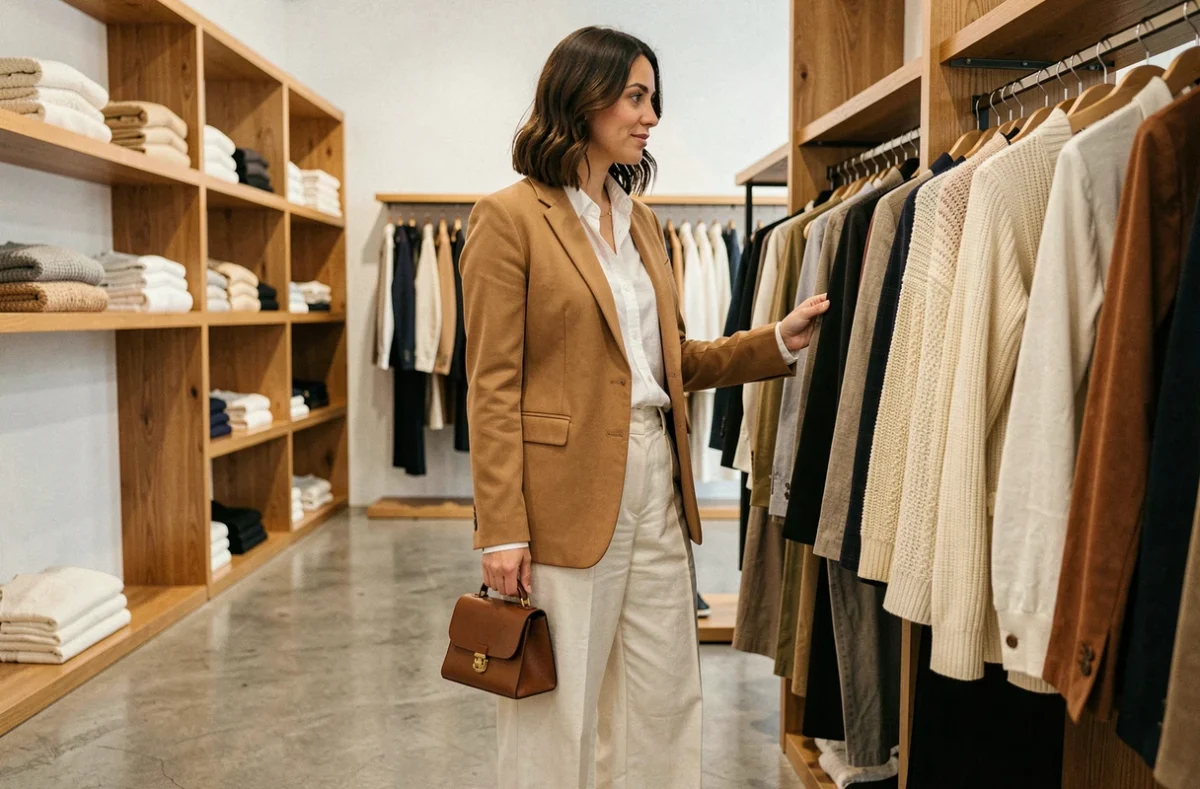
- Keep an eye on new arrivals at thrift stores or on resale platforms to fill a specific gap (a structured blazer, a linen summer dress) rather than browsing without a list.
Explore J3M’s fashion section to identify pieces that work well together before you buy, new or secondhand.

Fall-winter 2026 trends: runway maximalism and real-life wardrobes
Fall-winter 2026 collections point to a resurgence of maximalism on the runways: contrasting colors, multiple layers and loose silhouettes. Some New York shows, however, remain more understated. Runway trends do not form a uniform movement and do not necessarily translate directly to stores.
This distinction changes how we interpret a trend. An oversized plaid pattern seen on the runway might translate in a real-life wardrobe into a simple plaid scarf worn over a solid-colored coat. A trend is a signal, not a template to copy.
How to filter a trend before adopting it
Before adding a runway-inspired piece to your wardrobe, check whether it goes with at least three items you already wear. If not, it will be left at the back of your closet as soon as the next season arrives. A trendy garment that doesn’t go with anything you already own is a wasted purchase.
Maximalism works best in small doses. A bright color on an accessory (bag, belt or scarf) is enough to update a simple outfit. Layering a knitted vest over a classic shirt embraces the layering trend without requiring a big budget.
Choosing colors and cuts that suit your figure
Color acts as a frame: it draws the eye and changes how proportions are perceived. Dark shades visually narrow an area, while light shades make it appear larger. Working with two or three base colors (the ones you wear most often) and adding an accent color lets you vary your outfits without buying more.
Fit matters more than the brand or the trend. Trousers that fit well at the waist and rise can transform an entire outfit, whatever their price. Conversely, an expensive but poorly cut garment looks sloppy.
Fashion accessories: the most affordable way to express your personal style
Accessories (belts, watches, earrings, hats) change the look of an outfit without altering the clothes themselves. The same jeans and sweater can take two different directions depending on whether you add white sneakers or heeled ankle boots.
Limiting yourself to two or three accessories per outfit avoids a catalog-like effect and gives each chosen piece more impact. A scarf tied to a bag, a brooch on a jacket lapel: these details create a recognizable visual signature.

European textile regulations: what’s changing when choosing clothes
The European Ecodesign for Sustainable Products Regulation (ESPR), which entered into force on July 18, 2024, sets out rules for individual product categories. For textiles, adoption of a dedicated measure is planned for 2027. The specific requirements and their application dates will depend on the final text. There is not yet a general requirement for every garment to have a digital product passport.
This upcoming regulation will have practical effects on the products available in stores. Brands may have to disclose the durability, repairability and exact composition of their products. For consumers, this means access to more reliable information when choosing between two similar items.
Until these new requirements take effect, checking the composition label remains the most useful step. A fabric made mostly from a single natural fiber (cotton, linen or wool) is easier to repair and recycle than a complex synthetic blend. This often-overlooked factor has as much bearing on a garment’s longevity as its appearance.
Creating a personal style depends less on how many items you buy than on how well they work together. A streamlined wardrobe built around compatible colors, flattering cuts and a few well-chosen accessories covers most situations. The next trend is only worthwhile if it has a place in what you already own.