Equipping a kitchen starts with understanding what you actually do in it. A household that cooks three nights a week has different needs than a baking enthusiast or someone who mainly reheats prepared meals. Starting from your concrete habits helps avoid accumulating utensils that end up at the back of a cupboard.
Kitchen utensils for small spaces: sort before you buy
In a compact kitchen, every centimeter of storage counts. The classic reflex is to buy a complete set of cookware, a knife block, and a series of matching spatulas. The result: overloaded drawers and duplicate accessories.
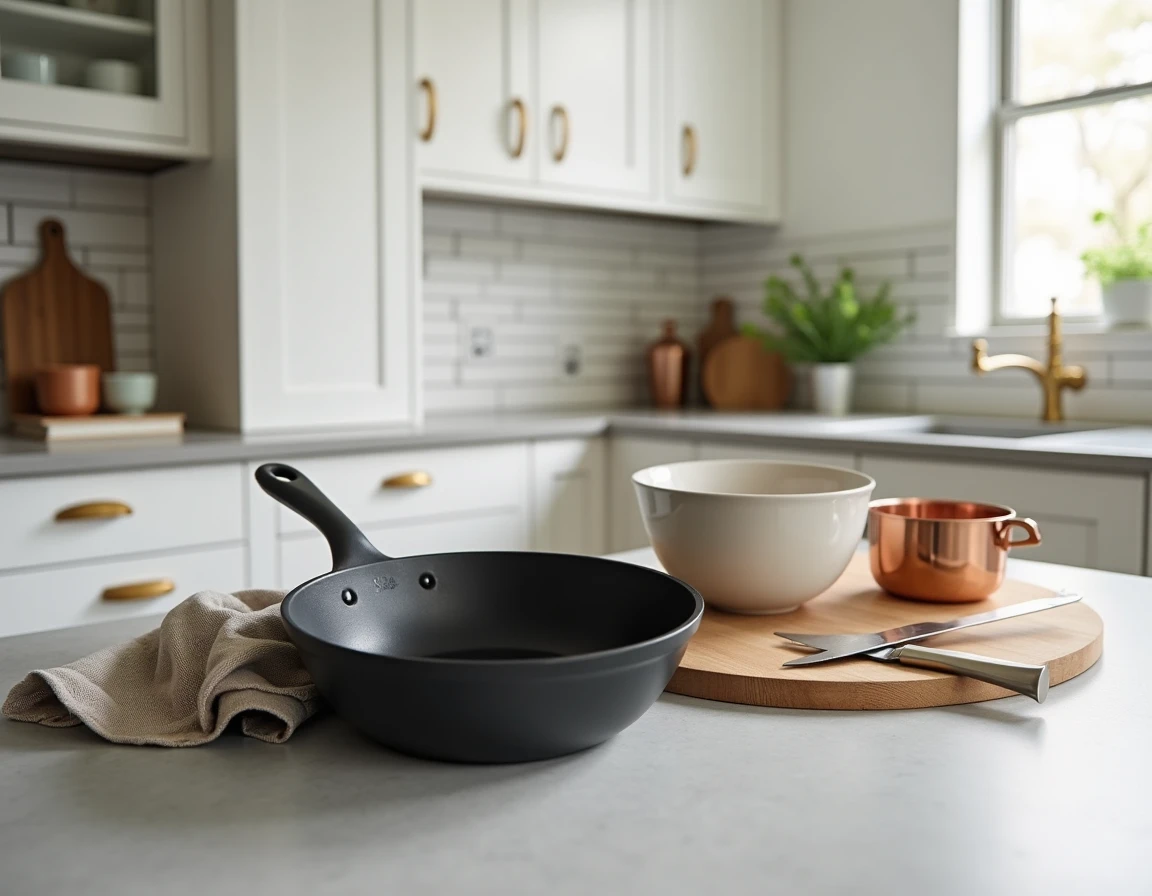
The most reliable method for equipping a small space is based on a prior inventory of your daily actions. A person who mainly sautés vegetables and cooks pasta needs just one medium-sized frying pan, one saucepan, and one stockpot. Three pieces are enough to cover the majority of common cooking tasks.
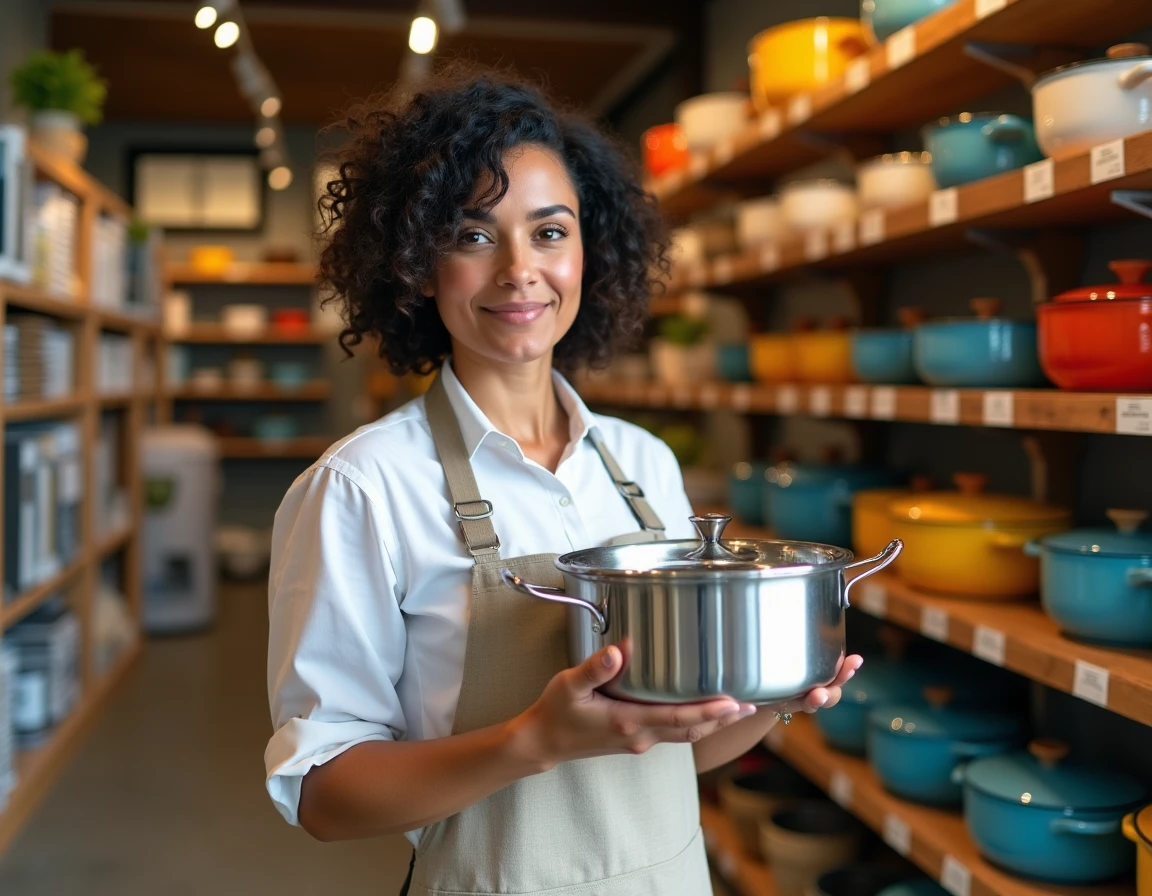
When looking for products suited to this type of kitchen, Gourmandises et Cie’s selection brings together ranges designed for real use, without an oversized catalog. The idea is not to multiply references but to target versatile pieces.
- A versatile chef’s knife alone replaces the six-knife block that most households barely use
- A medium-sized cutting board also serves as an extra work surface in a narrow kitchen
- A stainless steel mixing bowl acts as a salad bowl, mixing container, and marinade holder
One versatile utensil is better than three specialized accessories. This principle applies even more when storage is limited.
Materials of kitchen utensils: what really changes in use
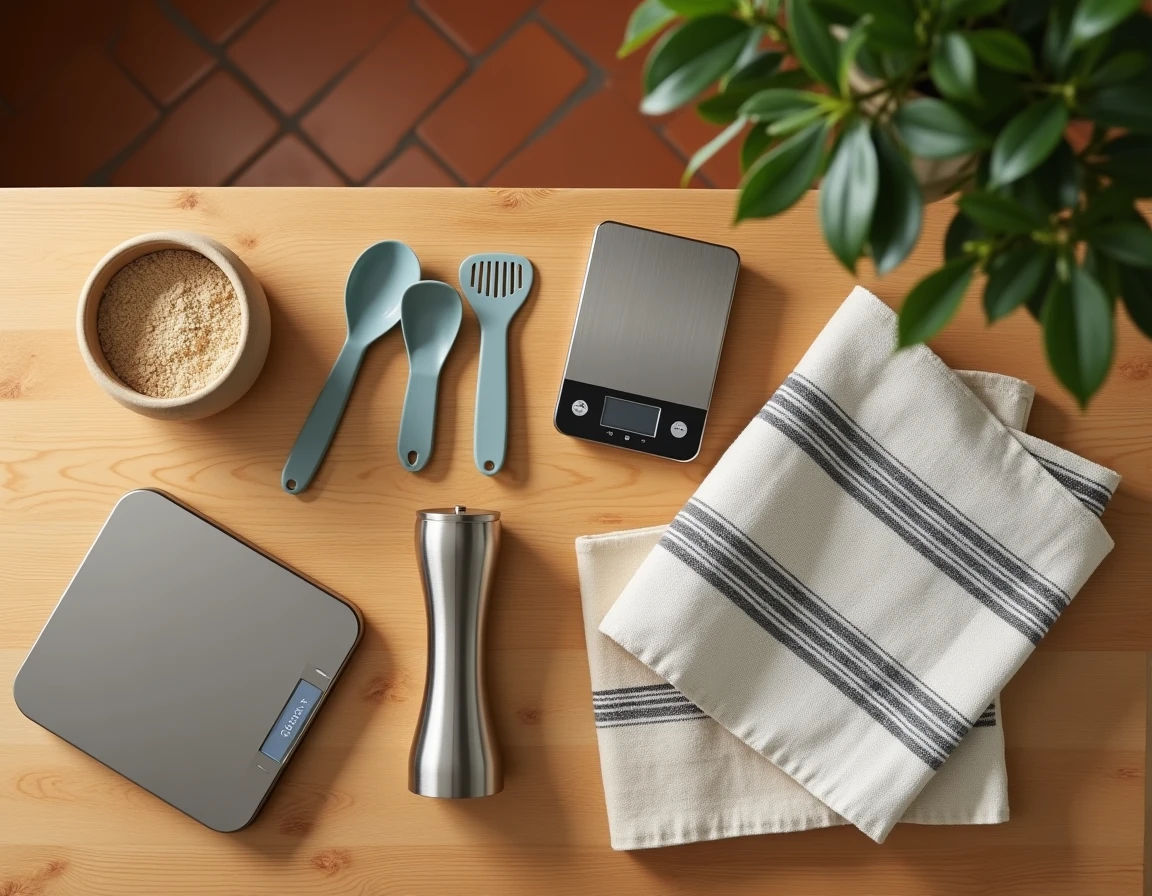
The choice of material determines the lifespan of a utensil, its maintenance, and its heat behavior. Three families dominate the consumer market: stainless steel, cast iron, and non-stick.
Stainless Steel: the Durable Standard
Stainless steel resists shocks, is dishwasher safe, and does not react with acidic foods. A well-maintained stainless steel saucepan can last for several decades. Its only drawback: stainless steel sticks without fat, which requires an adjustment period for dry cooking.
Cast Iron: Heat Retention
Cast iron (raw or enameled) retains heat and distributes it evenly. For stews, braises, and homemade bread, it is the most suitable material. Its main disadvantage is weight: a cast iron pot weighs several kilos, which can be an issue in a small space or for someone with limited mobility.
Non-Stick Coating: Convenient but Temporary
Non-stick pans make cooking with little fat easier and simplify cleaning. The coating wears out after a few years of regular use, making it more of a consumable than a long-term investment. For a kitchen that is not used much, this wear is slower, and non-stick remains a relevant choice.
Gourmet Equipment: Distinguishing Useful Pleasure from Decorative Gadgets
Gourmandises et Cie positions itself at the crossroads of functional equipment and the gourmet universe, with products that cater to both the pleasure of dining and everyday cooking. This approach has an advantage: it reminds us that being well-equipped also involves items that inspire a desire to cook.
The trap, however, is buying a handmade madeleine mold, a copper whisk, and a marble mortar without ever using them. Before any purchase, a simple question helps filter: will this item be used at least once a week?
For someone who cooks occasionally, the priority is on basics that cover multiple recipes:
- A quality frying pan for quick cooking (omelets, stir-fries, seared meats)
- A medium-sized stockpot or casserole for stews and soups
- A colander, a wooden spatula, and a peeler, three accessories used almost daily
- A kitchen thermometer, often overlooked but useful for meat cooking and homemade candy
Baking accessories are only cost-effective for those who bake regularly. A whisk, a rolling pin, and a scale are enough to get started. Piping tips, rings, and baking mats can come later, if the practice becomes established.
Kitchen Equipment Budget: Spreading Purchases Over Time
Equipping an entire kitchen at once represents a significant budget, especially if aiming for durable products. A gradual approach yields better results than a bulk purchase.
The first wave covers the essentials: a frying pan, a saucepan, a chef’s knife, a cutting board, and a few basic utensils. This foundation allows for the preparation of the vast majority of everyday recipes.
The second wave comes after a few months of practice. You then identify the actual gaps: a baking dish if you often make gratins, a wok if Asian stir-fries become frequent, a tart pan if baking takes up space in your habits.
Buying in two phases avoids unused utensils and allows for upgrading the pieces that are used the most. A knife used every day deserves a higher budget than an accessory used three times a year.
This logic also applies to small appliances. An immersion blender covers soups, sauces, and smoothies. A multifunction food processor is only justified if cooking becomes a regular and varied activity.
The last criterion to keep in mind concerns maintenance. A quality utensil that is poorly maintained deteriorates just as quickly as an entry-level product. Maintenance affects lifespan as much as the material. Sharpening your knife, oiling your cast iron, avoiding thermal shocks on non-stick: these simple actions extend the life of each piece by several years.